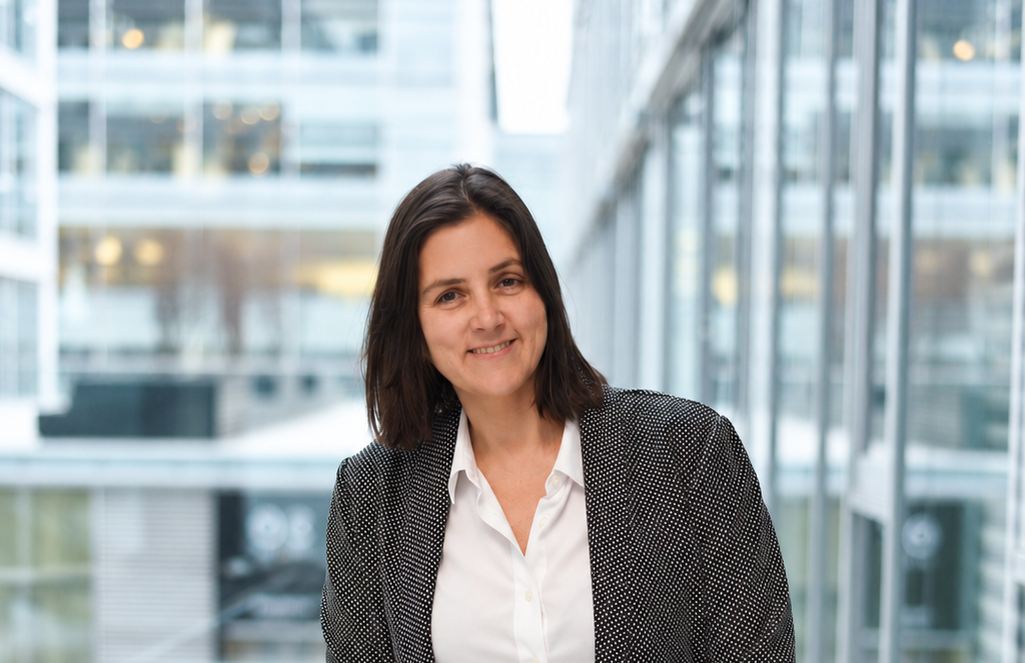
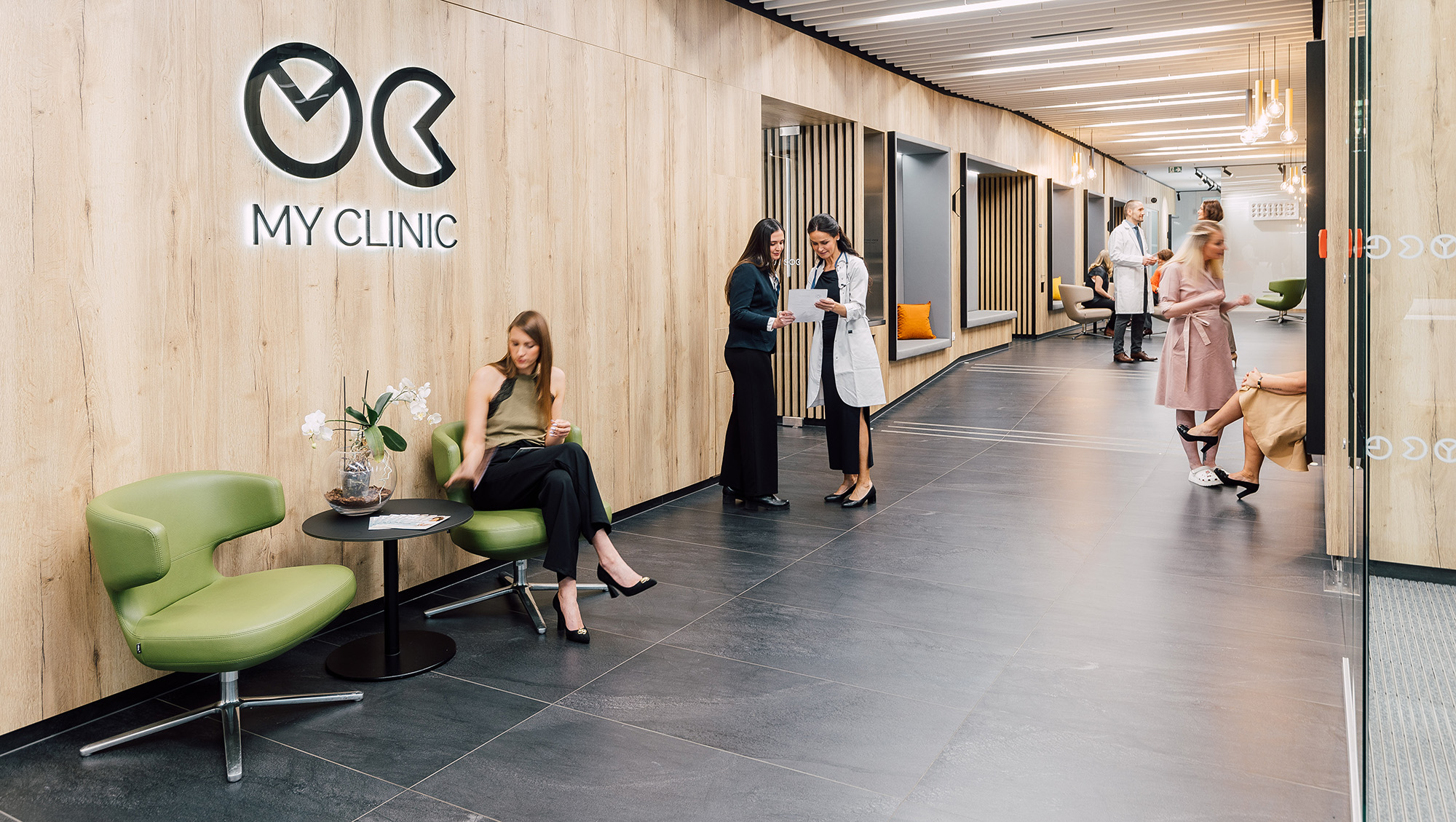
"Let's not put off looking after our health until we have time. Let's make time for it precisely so that we can live life to the fullest, work and dedicate ourselves to what matters to us," says Vanda Vynohradnyková Gaydečková, Director of MY CLINIC.
Premium care begins with trust
What is the first thing you would like clients or partners to associate with your clinic?
Above all, I would like people to associate MY CLINIC with trust. I want them to know they can turn to us not only when something is troubling them, but also when they want to actively prevent health issues and look after their health over the long term. Healthcare is a deeply personal field, and beyond a high level of medical expertise, it is essential to me that people feel safe with us, have enough time to ask their questions and understand what is happening to them and what options are available to them.
I would like MY CLINIC to be seen as a place where top-tier medical care naturally integrates with a human approach. A place where a client is not merely a diagnosis or an appointment slot in the calendar, but a person whose health and life circumstances are viewed within a broader context.
Expertise, continuity of care and human touch
What do you consider your clinic's main competitive advantage?
We are a relatively small private clinic that prides itself on an individual approach, personal relationships with clients and the high quality of care we provide. At present, we have no ambition to build an extensive network of medical facilities. We are primarily focused on developing and improving services within our existing clinic. Any potential future expansion would always have to be consistent with our values and, above all, must never come at the expense of the quality of care, which remains our fundamental priority.
I see our competitive advantage in the combination of a broad range of specialties, high-quality care and a personal approach. We offer dozens of specialties, yet we want to preserve an environment in which clients never lose the sense that someone truly cares about them. A key asset is our ability to integrate different areas of expertise, and take a more comprehensive view of a person's health.
We do not want to become a huge organisation. We want to be the best possible partner when it comes to health.
Continuity of care and the ability to build long-term relationships are also important. Trust is not established through a single visit. It develops gradually, through the realisation that the care is effective, communication is clear, and the client knows exactly who to turn to.
What is it like to run a private clinic at a time when client expectations are constantly increasing?
It is a great responsibility and, at the same time, a very dynamic job. Today, clients expect not only high-quality medical care but also accessibility, prompt communication, comfort, predictability and services that align with the pace of their own lives. And rightly so. At the same time, however, it is important not to confuse the quality of healthcare with speed or hotel-like comfort. Healthcare has its own specifics, and patient safety and sound medical decisions must always remain its highest priorities.
From a management perspective, balancing all these requirements is challenging. You need excellent specialists, efficient processes, high-quality technology and economic stability. But above all, you need a great team of people who can work together and pull in the same direction. And by that, I do not mean just doctors and medical staff. Every employee of the clinic, regardless of their position, plays an important role in the overall system. It is the synergy among all these individuals that ultimately creates high-quality care and a positive experience for our clients. My role is to foster an environment in which all these different aspects support one another rather than compete. It also involves constantly seeking a balance between what we would like to offer our clients, what they actually need and what we can consistently deliver at the highest standard.
Is it possible to maintain the human touch in healthcare and remain economically sustainable as the clinic grows and employs dozens of specialists?
I believe it is, but it will not happen automatically. Growth brings the risk that the personal approach becomes lost in processes, information sharing and organisational complexity. That is precisely why the human dimension of care must be consciously protected and reflected not only in the clinic's values but also in its everyday operations.
At the same time, we must be economically responsible. High-quality care requires sufficient time, appropriate staffing and good facilities. All of this comes at a cost. I therefore do not see sustainability as a choice between a human approach and efficiency. On the contrary, we need efficient operations so that we can dedicate more energy to what truly matters to our clients.
The larger an organisation becomes, the less it can rely on improvisation and the individual commitment of its employees. Looking after our staff is equally important. We need a satisfied team with strong leadership, clearly defined responsibilities, well-established processes and a shared culture. Our goal is to grow without losing the very foundation upon which MY CLINIC is built.
Technology as a means, not an end
New technologies and digitalisation play a major role in healthcare. Where do they help you the most, and when have they actually made your life more complicated?
Technology can be a significant help in simplifying administration, improving access to information and coordinating care across different medical specialties. In healthcare, any change that allows doctors and medical staff to spend more time with clients rather than on routine tasks is extremely valuable. From the management perspective, digitalisation and high-quality data are also important for capacity management, planning and evaluating both the quality and efficiency of operations.
On the other hand, simply introducing new technology does not automatically lead to improvement. If a system is not properly integrated with other tools, is complicated to use or adds extra administrative steps, it can actually make work more difficult. Protecting sensitive health data and ensuring security also present a major challenge.
That is why I see technology not as an end in itself, but as a means to an end. We should first understand what problem we want to solve and only then look for a suitable solution. And we should always assess not only its technical capabilities but also its real benefits for clients and the healthcare team. Technology should make our work easier, not become something that dictates how we work.
Which global trends are most likely to fundamentally transform client care over the next few years?
Above all, I expect a shift away from reactive medicine, which addresses health problems once they have already appeared, towards a greater emphasis on prevention, early risk detection and long-term health management. Personalised medicine, the use of data and predictive tools that can help us better identify individual risks will play an important role.
Artificial intelligence also has significant potential, for example in supporting diagnostics, evaluating medical findings and processing medical documentation. I expect it to increasingly help healthcare professionals make decisions based on larger amounts of information. However, it should not replace a doctor's clinical judgement, their professional responsibility or personal communication with patients.
Another trend will be the development of telemedicine and digital tools for monitoring health. Not every situation requires an in-person visit, but it is equally important to correctly identify when a physical examination is necessary.
For MY CLINIC, it will be essential to use these opportunities meaningfully and combine technological progress with continuity of care and a human approach. In my view, the future will not be about choosing between technology and personal care. It will be about how effectively we can integrate the two.
How do you approach the currently popular concept of longevity?
The term longevity has, to some extent, become a marketing buzzword, but its popularity reflects something far more significant: prevention and long-term healthcare. From our perspective, it is not simply about how many years a person lives, but above all about their health and quality of life during those years.
That is precisely why we have developed the MY LONGEVITY programme at MY CLINIC, without following passing trends. It is built on medical expertise, a personalised approach and, above all, prevention. It combines a comprehensive initial medical examination and laboratory diagnostics with care provided by specialists in physical activity, nutrition, sleep and recovery. The programme guides clients over a period of three or six months, with the aim of establishing realistic and sustainable long-term lifestyle changes.
We want to be a long-term partner to businesses, caring for their most valuable asset – their employees
Are you planning to introduce any new services or programmes for corporate clients in the near future?
For businesses, the health of their employees is not only a matter of responsibility but also of long-term stability, performance and satisfaction. However, every company has its own specific needs and priorities, which we strive to take into account as much as possible. That is why we approach each collaboration individually and offer tailored solutions based on the client's specific needs and requirements.
We see corporate healthcare as a partnership based on the genuine needs of each company and its employees. It is essential that such programmes offer real health benefits, are properly designed and create value for both sides. Our goal is to shift the perception of healthcare benefits away from one-off medical examinations towards systematic and meaningful long-term healthcare.
What single piece of advice would you give to entrepreneurs and managers on how to look after their own health – and the health of their key people – in such a fast-paced world?
I would advise them to approach their health with the same responsibility and discipline they apply to managing their businesses.
Successful entrepreneurs and managers are accustomed to planning, assessing risks and investing in the future. Paradoxically, however, they often put off taking care of their own health until a problem arises. Yet good health is the most important prerequisite for achieving their professional and personal goals over the long term. Prevention should therefore not be something people make time for only when their work schedules allow. It should be a natural part of their schedules. The same principle applies to looking after employees. Investing in their health can create value not only for the employees themselves but also for the entire organisation.
Health is often perceived as a personal matter, but its impact is much broader. It affects family life, working relationships and the ability to lead and make decisions over the long term. Investing in health is therefore not a waste of time, but one of the most important investments in the future.
MY CLINIC is a collective effort
Your profession requires a great deal of energy. What brings you the greatest joy at work and helps you recharge your batteries?
What brings me the greatest joy is seeing that we are making progress and that our work has a real purpose. When we manage to bring together people who share a common goal, find a solution to a complex problem or turn an idea into something that works in practice. Healthcare is a field in which there is a real person behind every process and every decision. That is a great responsibility, but also a powerful source of motivation.
I draw energy from working with people who are experts in their fields, show initiative and want to improve things. I enjoy exploring new opportunities, looking at problems from different perspectives and creating the conditions so that good ideas don’t just remain on paper. I’m energised when people are not afraid to speak up, when they suggest changes, take initiative and point out areas for improvement. In short, it is the collaboration itself. The fact that we are building MY CLINIC together.
And perhaps that is also what matters to me when a difficult challenge arises: reminding myself why we are doing all this and the positive impact our work can have. Not every day is easy, but a sense of purpose and the opportunity to make a real difference help me keep going. And, of course, it brings me enormous joy when a client smiles and praises our services.
Do you have a professional dream? What would you like to achieve as the head of the clinic?
My professional dream is to build an organisation that is successful not only in terms of financial results but, above all, in terms of the quality of care, the trust of its clients and the environment it creates for its employees. I would like our clinic to demonstrate that private healthcare can combine the highest standards of medical expertise with a human approach, innovation and economic sustainability. I want it to be a place that moves expectations of healthcare in the right direction. A place where people understand that modern medicine does not have to be impersonal, and that true quality is reflected not only in medical outcomes but also in how a person feels while receiving care.
I would consider it a success if, ten years from now, MY CLINIC were still a place where people are happy to return because they know that they will receive high-quality care and that someone will genuinely listen to them.
Vanda Vynohradnyková Gaydečková was interviewed by Jana Jenšíková
Photo credits: MY CLINIC