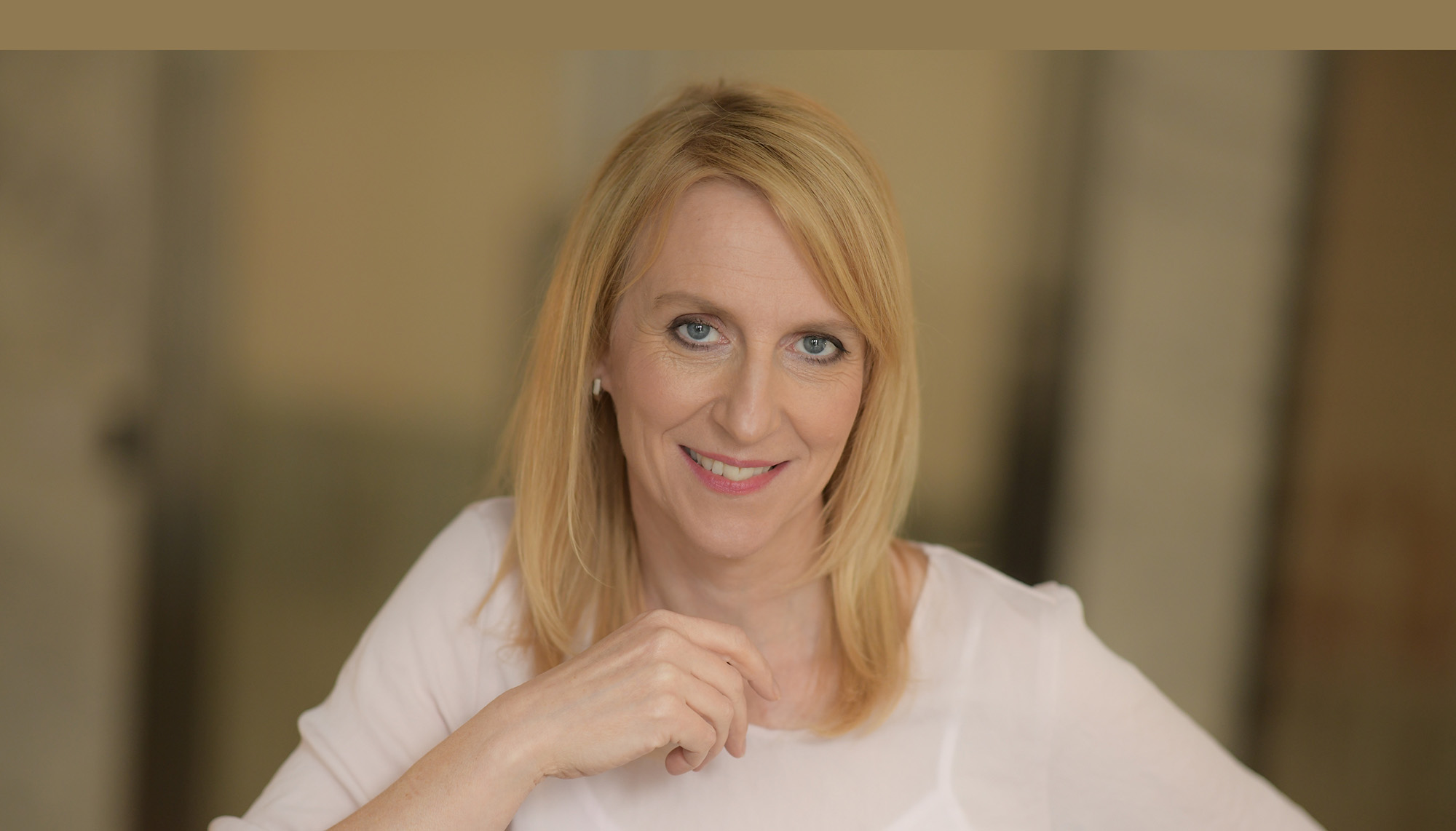
Blanka Svobodová took over responsibility for Corporate and Municipal Banking at Komerční banka this spring. She has over 22 years of experience in banking, focusing on large corporate clients, the development of strategic partnerships and support for both domestic companies and the public sector. Having previously helped shape KB’s business and product strategy, she is now returning to direct client work. Her main goal is to strengthen the solid position and strong reputation of KB’s corporate banking business.
Your career has been closely connected with corporate banking. Still, was there anything that surprised you after taking up your current role?
I am more aware than ever of the accelerating pace of change and the sheer number of challenges that both the bank and our clients are facing. High inflation, geopolitical shifts, ESG, digitalisation, the rise of AI – these are just some of the major challenges. In reality, we are constantly navigating changes to which we must be able to respond.
I knew that Czech companies were flexible and capable of responding to change, yet I have still been positively surprised by just how strong their ability to adapt is today. They are able to respond productively and adjust even to changes that are rapid and unexpected. For a bank, it is important to know that its clients possess this capability.
As part of the Société Générale Group, you have direct insight into the corporate environment in other countries as well. Do you see this level of adaptability as something specific to Czech companies?
You could say so. It is deeply rooted in the DNA of Czech entrepreneurs. Our companies are flexible and able to adapt quickly to change, particularly thanks to a combination of historical experience, a specific business culture and the structure of the economy. Czech managers have proven capable of coping even during difficult times marked by shortages or sudden changes in regulations. Looking only at recent history, we can recall how they responded during the pandemic, the energy crisis or inflation shocks, and how they adapted business models accordingly. Of course, the larger the company, the more difficult change becomes, yet even there, we find many good examples.
In this context, we must also mention our strong industrial tradition, technical background and engineering know-how. Compared with some other countries, this is a major advantage.
Do you also see this capability in new technology sectors?
We see the number of new startups emerging each year, quickly finding their way and expanding abroad, whether in IT services, digitalization or e-commerce. From the bank’s perspective, we observe that these newer sectors, unlike many traditional ones, are growing very dynamically.
Could you name the three biggest challenges the business environment is currently facing, from your perspective?
It is certainly the labour market, specifically the availability of a skilled workforce, which is closely linked to productivity. We know that companies often win contracts but then face the challenge of figuring out who will actually execute them.
The second area is digitalisation and process efficiency, including AI. AI is a major phenomenon today and expectations are high, but there are still many questions regarding its implementation and actual impact.
Thirdly, I would mention ESG as a whole. At first glance, it might seem like companies are already well-versed in this area and that everything is running smoothly. However, even here, numerous changes and new constraints are emerging that require a response.
How do you respond to these challenges as a bank? And what do companies expect from you most?
They clearly expect us to stand by them even in more difficult times, to advise them and lend a helping hand. They look to us to provide a protective umbrella – figuratively speaking – even when it is pouring rain.
Corporate banking still relies heavily on people and personal contact. It depends on the experience and skills of our regional banking advisors, on their deep and long-term knowledge of clients, and on their ability not only to analyse, but also to listen. When providing services to these clients, we always evaluate their specific challenges and needs. We strive to recognize their capabilities and understand their visions, assessing their feasibility rather than viewing them solely through the lens of numbers.
Corporate banking at KB is still about building trust based on long-term relationships and mutually positive experience.
As has often been said, corporate banking is about building trust based on long-term relationships and mutually positive experience. We are successful in this, and my task is to ensure that Komerční banka remains the bank of Czech business.
What do you see as KB’s greatest advantages?
One clear advantage is our local knowledge and strong regional presence. Every region in our country has its own specific characteristics, and thanks to our local representation we know and understand them thoroughly, which is highly valuable. At the same time, the strong multinational backing of the Société Générale Group gives us strength abroad, enabling us to provide effective advice to companies expanding into international markets.
Advisory services are also one of your bank’s strengths, whether through the specialised services of KB EU Point or your subsidiary ENVIROS, which has long focused on consultancy regarding subsidies and energy, having served a great many companies. Are you introducing anything new?
New opportunities are opening up for companies in the nuclear energy sector. In this context, companies are required to obtain ISO 19443 certification, and ENVIROS can now provide them with comprehensive support throughout the process. It guides our bank’s clients through the entire process, including securing grant support. (More information on page XX of this issue of TRADE NEWS – editor’s note.)
Finally, a personal question. What do you enjoy most about your work, and what do you want to achieve in your new role?
What I enjoy most is clearly working with people and returning to direct contact with clients. I find the creative process fascinating – when we look for solutions together and help clients fulfil their business ambitions. Proof that we are doing a good job lies in the clients who have been growing alongside us for decades.
In my new position, I want to draw on my experience in strategy development and change management. For me, the bank represents an interconnected system – the corporate and retail worlds overlap. To provide top-quality services, we must collaborate seamlessly within the bank. I like structure and an analytical approach, so I will focus on optimising our processes and finding the best solutions.
The goal is clear: to ensure that the corporate business has a strong voice both externally and within the institution, and that our people receive the respect and recognition they deserve for their everyday work.
Ms. Blanka Svobodová was interviewed by Jana Jenšíková
Photo credits: KB